Tiramisu sounds simple until you actually try to make it.
In a classic way it is a structure built from coffee-soaked savoiardi, a mascarpone cream based on sabayon (egg yolks whipped with sugar), and careful layering that needs time to set.
Done well, it has a very specific balance:
soft but not soggy,
airy but not loose,
sweet with a clear coffee bitterness.
The cream can split, the cookies can turn into mush, and the whole dessert needs hours in the fridge. Even though professionals make it safe by gently heating the eggs or using pasteurized ones, it still feels like a project - not something you throw together before guests arrive.
So instead of skipping tiramisu altogether, people started removing the difficult parts. And in many cases, it works better for real-life hosting.
1. The most popular shortcut: no eggs, same structure
This version keeps the layers, but swaps the cream:
mascarpone + whipped cream instead of sabayon.
You still dip the cookies in coffee, still layer everything, still finish with cocoa — but the process is much more forgiving. No temperature control, no concern about eggs.
The flavor is a little lighter, but for most people, it’s close enough.
2. Mix-first versions (where structure stops mattering)
Another direction is even simpler: break the structure entirely.
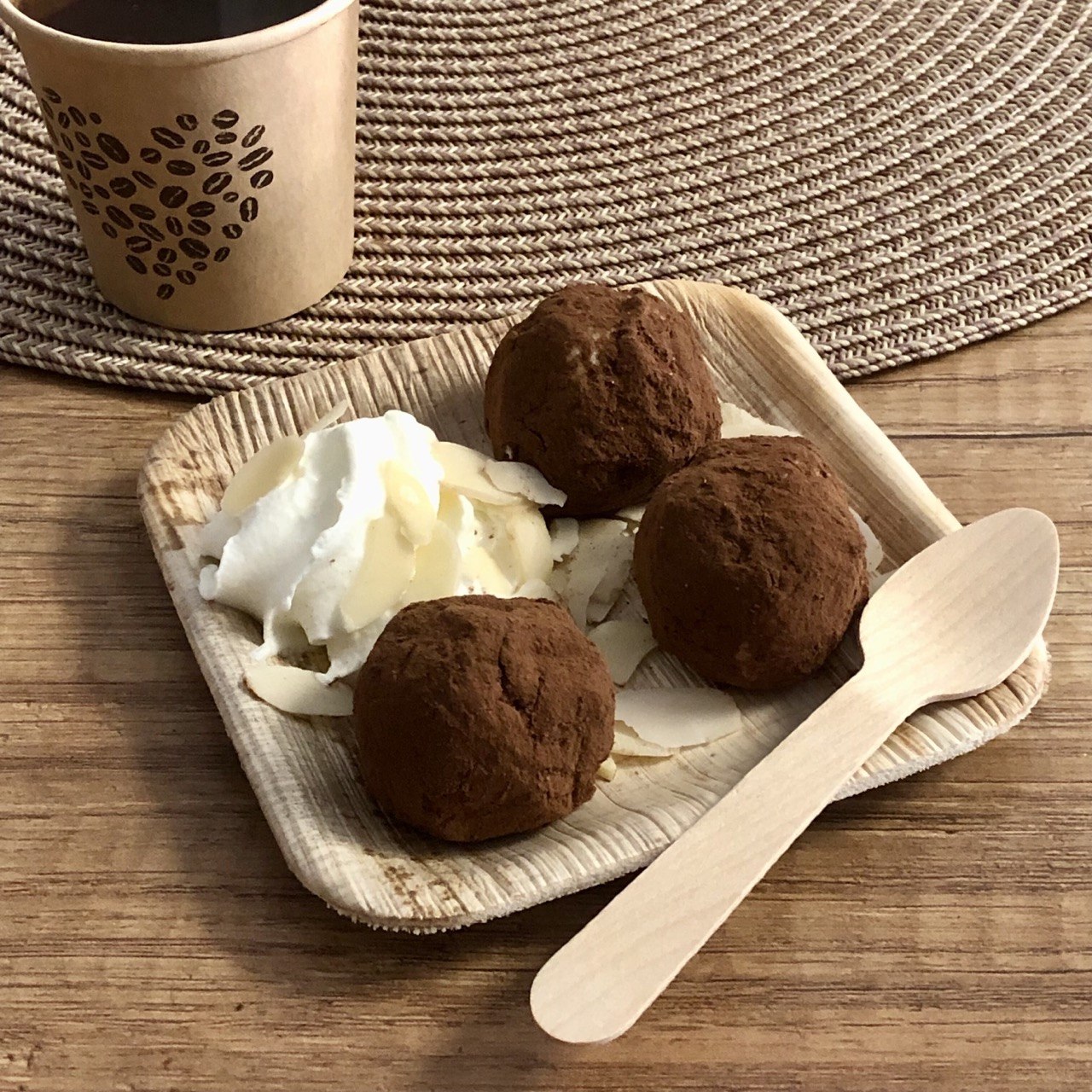
Crush the cookies, add espresso and mascarpone, mix everything, shape it into small bites, and roll in cocoa.
It no longer looks like tiramisu - but it tastes like it.
And more importantly, it becomes portionable.
This is where small plates start to make sense. A few tiramisu bites on a 4-inch palm leaf plate read as a finished dessert, not as “something improvised in the kitchen.”
3. “From the package” versions
You’ve probably seen these online: ultra-fast versions made directly in a container of cream cheese or yogurt, with espresso poured in and cookies pushed inside.
They are clever, and they work for content - but they are not something you would usually serve to guests as-is.
Still, the idea behind them is useful: simplify as much as possible, then rethink the format.
4. Tiramisu as a filling, not a dessert
One of the more interesting shifts is using tiramisu cream as a component rather than the final form.
You see it in:
filled donuts
croissants
layered cups
dessert boards
The flavor moves easily between formats. Once the structure is no longer fixed, tiramisu becomes more flexible - and often more practical.
Classic tiramisu is made to be sliced and served.
Most modern gatherings are not.
People move around, build small party plates, come back for something else, and rarely sit down for a single plated dessert. That is why smaller formats - cups, bites, mini portions - feel more natural right now.
They are easier to place across the table, easier to take, and easier to make look intentional.
If the goal is something quick, neat, and still recognizable, tiramisu has its easier versions - the kind that look good on the plate and still leave you time to actually enjoy your guests.