Not every evening event needs dinner. At small receptions, people come for the art, speaker, launch, or conversation. Food makes the room feel welcoming without becoming the main attraction.
This format works for gallery openings, artist receptions, book launches, author talks, poetry readings, film screenings, studio open houses, panel discussions, networking mixers, alumni gatherings, and conference receptions. It also suits product launches, showroom openings, pop-ups, brand previews, fundraisers, donor receptions, and community events.
Hosts often invite friends and colleagues to support the artist, speaker, organization, or new business. Since many guests may not know one another, drinks and small bites also make conversation easier.
Option 1: A Simple Wine and Cheese Reception
The classic menu is still one of the most practical:
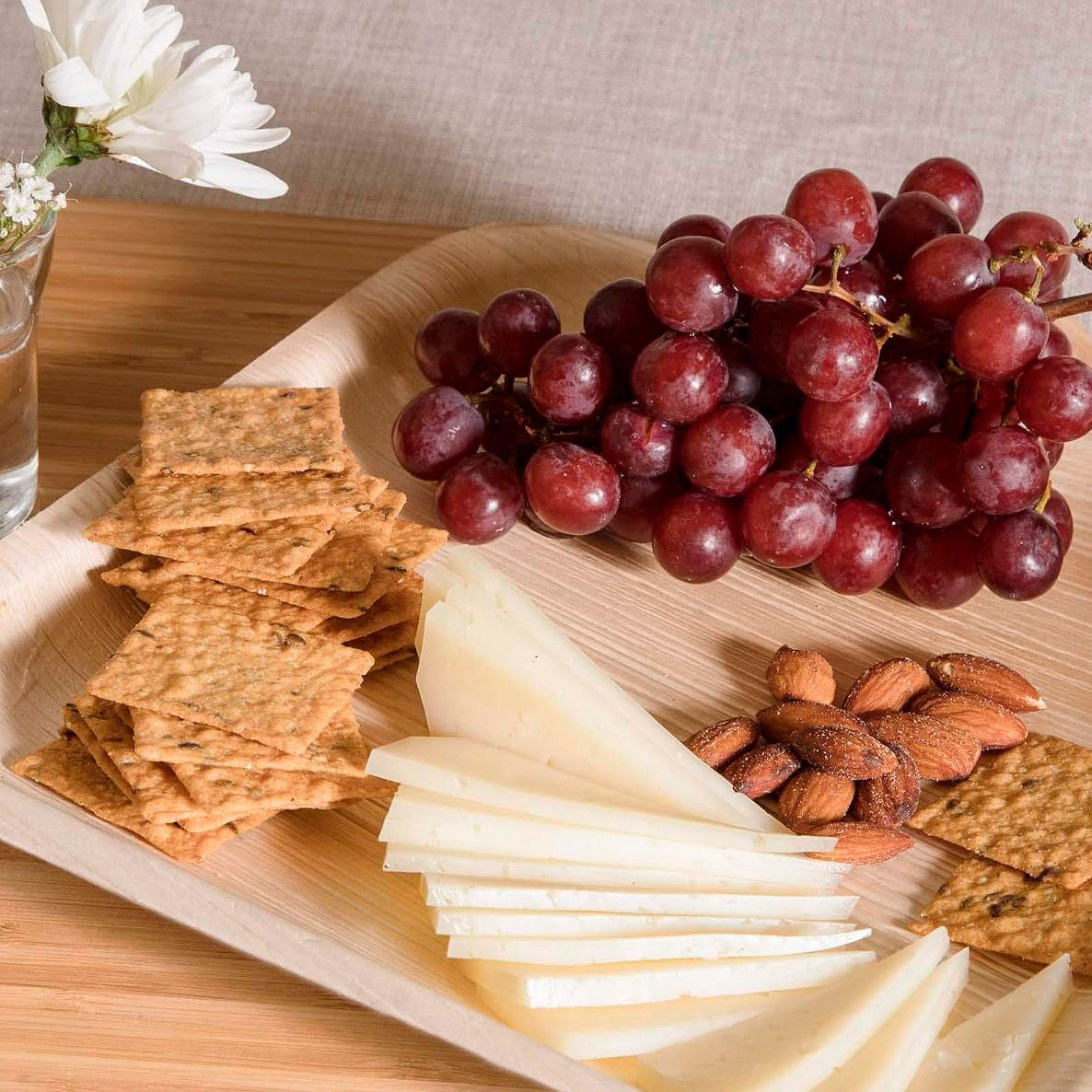
- two or three kinds of cheese;
- crackers or sliced baguette;
- grapes or dried fruit;
- nuts;
- olives;
- wine;
- still and sparkling water.
For a short event between approximately 5:00 and 7:00 p.m., this may be all you need—especially if the invitation sayswine and cheese orlight refreshments.
Napkins or Small Plates?
Cocktail napkins work for one dry bite. Once guests want cheese, grapes, olives, and crackers together, small disposable plates are more convenient.
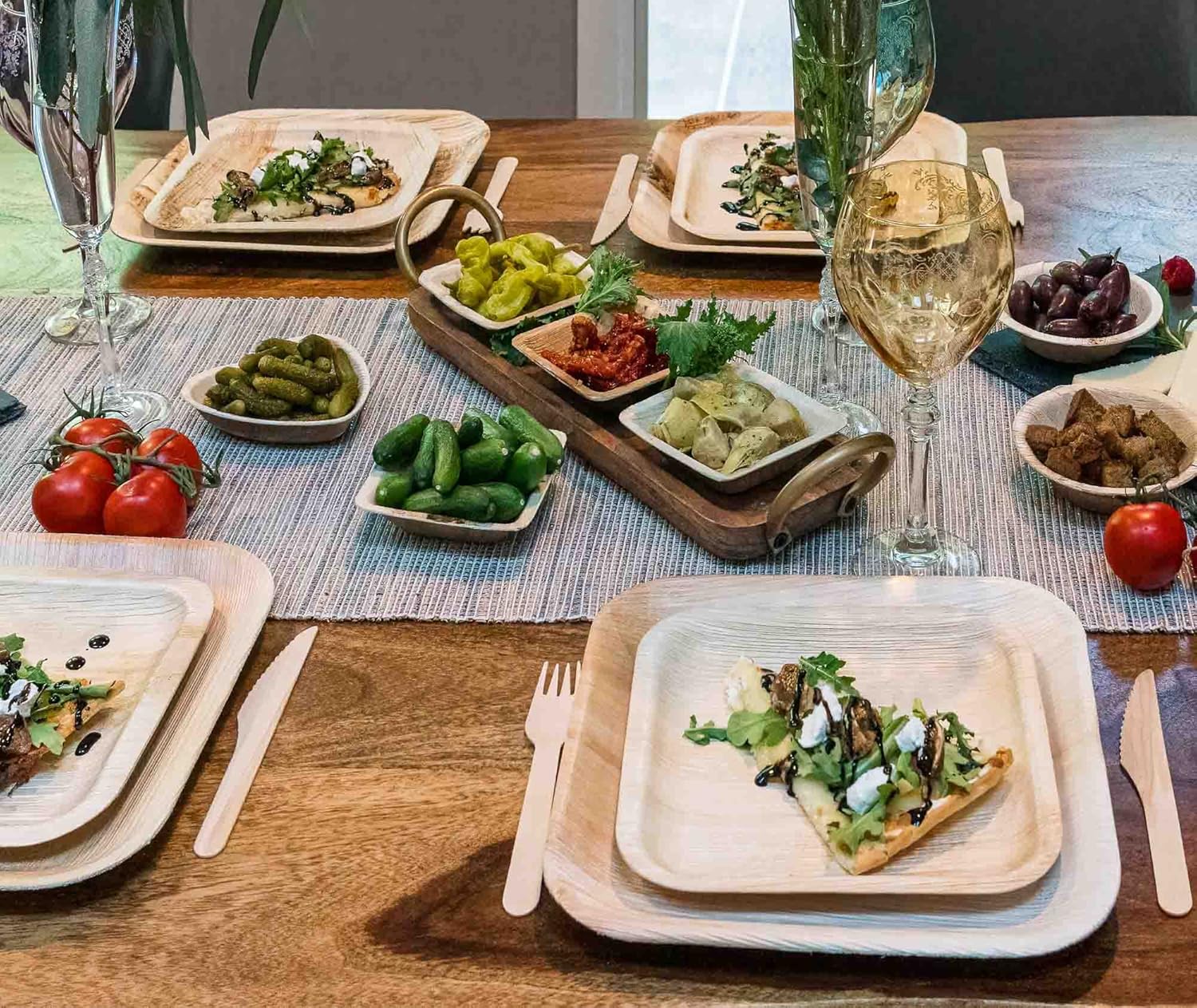
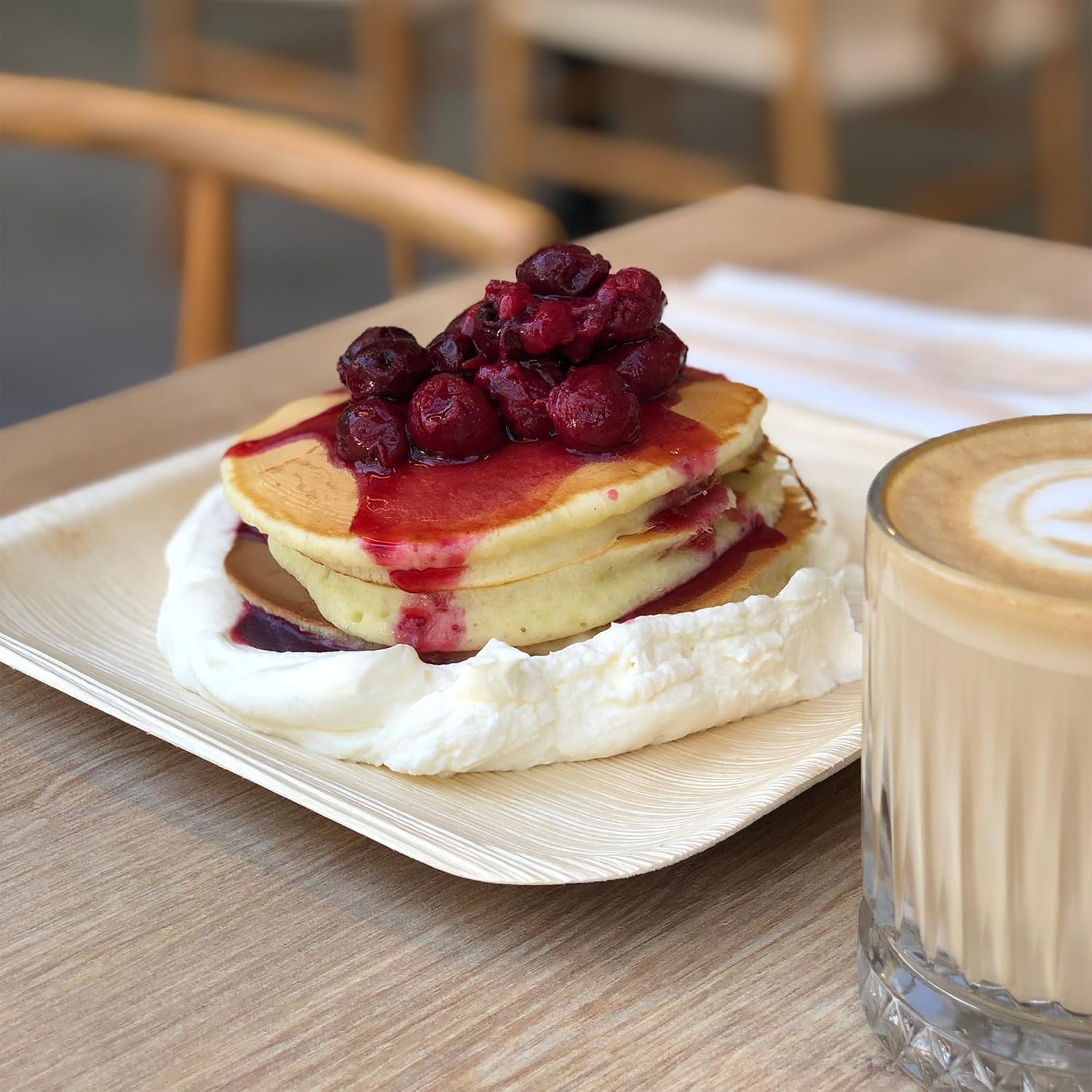
Arrange the food on shared boards or platters and place a stack of small palm leaf plates nearby. Guests can take several items and move away from the serving table. Palm leaf also has a natural look that suits galleries, studios, bookstores, and showrooms.
Serve nuts and olives in small bowls with cocktail picks or wooden taster forks. Cut grapes into small clusters so they are easy to pick up while holding a wineglass.
Option 2: Wine, Cheese, and One Prepared Bite
For a more generous reception, keep the basic menu and add one prepared savory item:
- caprese skewers with tomatoes, mozzarella, and basil;
- mini quiches;
- pinwheel sandwiches;
- flatbread cut into small squares.
This one addition makes the table feel planned without turning the event into a full catering project.
Caprese, antipasto, fruit, chicken, or shrimp bites can be assembled on short bamboo skewers. Mini quiches, flatbread are better served on small party plates, especially when warm, flaky, or oily.
Arrange prepared bites on serving platters and replenish them in small batches. Individual pre-portioned disposable plates are useful during a scheduled reception break, but self-service usually works better when guests arrive at different times.
Choose Food for Standing and Talking
Guests will probably be standing, holding a drink, and moving between conversations. Choose food that:
- fits on a small plate;
- can be eaten in one or two bites;
- does not require a knife;
- will not drip or crumble easily;
- can be picked up while holding a glass.
When choosing plates for catering, consider how guests will actually eat. Small plates are enough for wine and cheese, while larger palm leaf plates work better when the menu includes warm or substantial appetizers. Bamboo skewers and small wooden forks keep serving simple and reduce the need for full-size utensils.
The goal is not an elaborate buffet. Start with wine, cheese, crackers, fruit, and nuts. Add one prepared bite for a warmer welcome, and serve more substantial food only when the timing means guests will expect dinner. With practical plates for events and easy-to-hold appetizers, the food can support the occasion without taking it over.