Good plating is usually not about complicated decoration.
Most restaurant dishes look appealing because they use a few simple ideas: space, contrast, focus, and texture. And these same principles work just as well for home meals, outdoor summer dinners, or backyard parties.
1. Leave space on the plate
One of the easiest ways to make food look more elevated is to stop overcrowding the plate.
Restaurants often serve pasta on large flat plates instead of packed bowls because the empty space around the food helps the eye rest. Designers call thisnegative space.
When food has room around it:
- the ingredients stand out more clearly;
- the sauce becomes more visible;
- the dish feels calmer and more intentional.
Simple food instantly looks more refined when the plate is not overloaded.
2. Add contrast
Restaurant food usually combines different textures and colors in the same dish.
A cream soup feels more interesting with:
- crunchy croutons;
- fresh herbs;
- a swirl of cream on top.
The contrast makes the dish feel fresher and more dynamic instead of flat and one-note.
The same idea works everywhere:
crushed chili on eggs, herbs on potatoes, parmesan over pasta, flaky salt on desserts.
Small details help the eye separate textures, colors, and layers.
3. Keep a clear focal point
Good plating usually has one main element that stands out first.
If everything competes equally for attention, the plate starts feeling messy instead of abundant.
With meat and vegetables, for example:
- the protein stays visually dominant;
- vegetables support it instead of covering it;
- sauce and garnish help guide attention toward the main ingredient.
The goal is not to add more decoration.
It is to make the important part easier to notice.
4. Disposable dinnerware can still feel elevated
Disposable plates do not have to mean forgettable presentation.
The shape, texture, and color of the plate affect how food feels visually — which is why palm leaf plates work especially well for warm, textured foods.
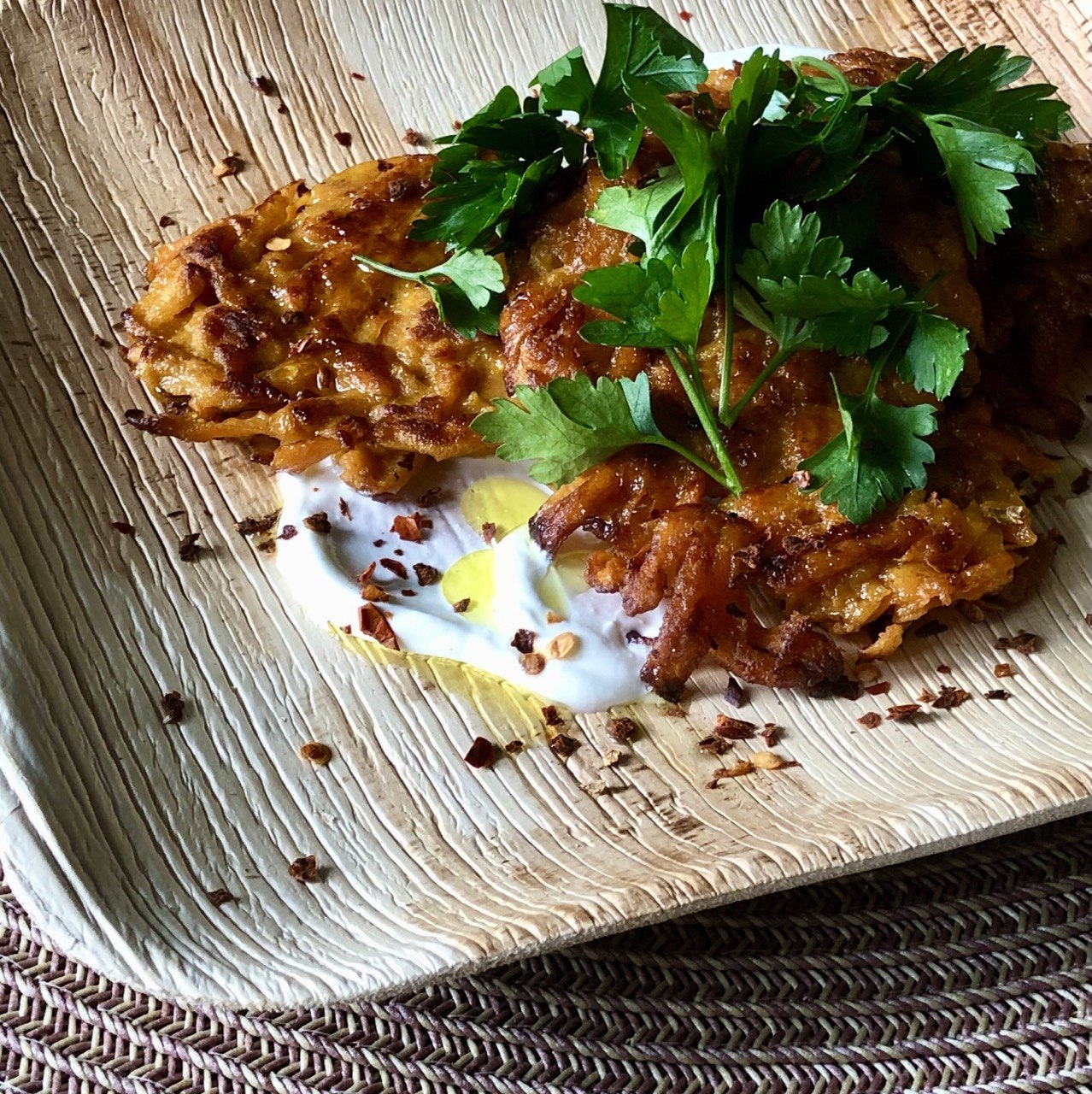
Imagine crispy golden hash browns:
- sour cream underneath;
- herbs and crushed chili on top;
- golden oil catching the light.
The natural grain of the palm leaf plate becomes part of the presentation itself, adding warmth and texture that plain paper plates cannot.
Simple food starts feeling more restaurant-inspired — without becoming complicated.