French toast began as the Cinderella of the kitchen: stale bread, too useful to throw away but no longer good enough to enjoy on its own. In France, it is called pain perdu — “lost bread” — because the idea was simple: rescue the bread before it is lost. So people soaked it, sweetened it, fried it, and gave it a second life: soft inside, golden outside, and suddenly worthy of fruit, cream, syrup, honey, and a beautiful plate.
Where French Toast Rules Now
1. American brunch: maple syrup, berries, and powdered sugar
In the United States, French toast is a breakfast and brunch classic. It is often served in thick slices with butter, powdered sugar, maple syrup, strawberries, bananas, or mixed berries. Sometimes it comes as part of a full breakfast plate with eggs, bacon, sausage, and hash browns.
A good example is IHOP’s Thick ’N Fluffy French Toast, served in classic versions or with strawberries and bananas. In a combo plate, it can come with eggs, bacon, sausage, or hash browns.
Serving idea:
Thick slices + butter + powdered sugar + maple syrup.
This is the most familiar classic brunch plate: warm, sweet, generous, and easy to recreate at home.
2. Paris: brioche, fruit, cream, and ice cream
In France, pain perdu often looks less like “toast” and more like a brioche dessert. It can be soft, buttery, golden, and served with fruit, cream, honey, or ice cream.
Le Pain Quotidien serves pain perdu made with signature brioche, a light sugar crust, seasonal fruit, strawberries, blueberries, fresh mint, and sour cream.
Serving idea:
Brioche + strawberries + blueberries + mint + sour cream or crème fraîche + honey.
This is closer to a French café dessert: simple ingredients, but softer, lighter, and more elegant.
3. San Francisco / Verjus: caramel, custard, and vanilla gelato
In restaurants, French toast can become a true plated dessert. It is no longer just breakfast. It becomes a contrast of textures and temperatures: warm and cold, soft and crisp, sweet and slightly bitter.
At Verjus in San Francisco, pain perdu is made with house-made brioche, soaked in custard, caramelized, and served with bitter caramel sauce and vanilla gelato.
Serving idea:
Caramelized brioche + caramel sauce + vanilla ice cream or gelato.
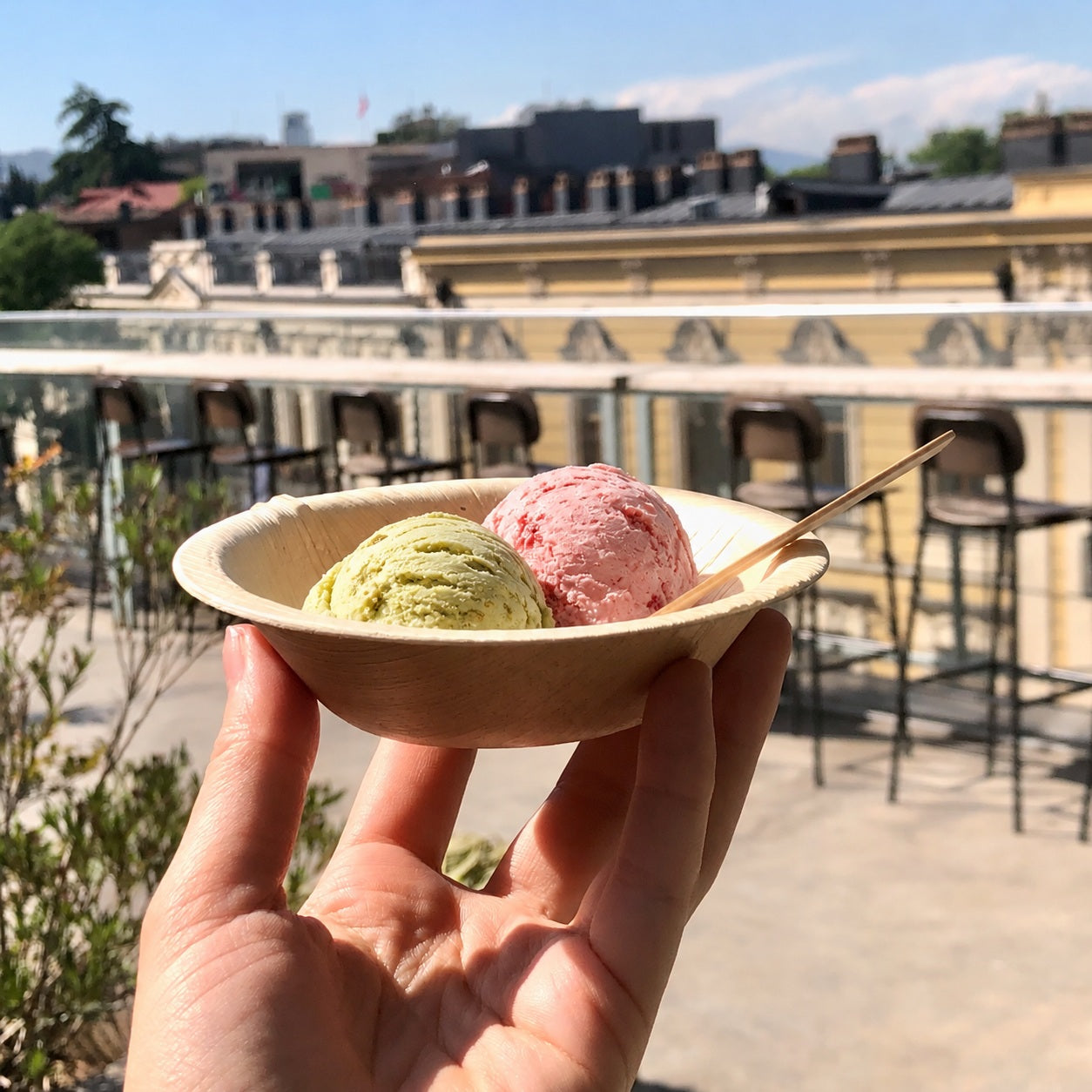
For a home version, serve French toast with honey or caramel and add a small scoop of vanilla ice cream. It instantly moves from breakfast to dessert.
4. Tokyo / Ivorish: fruit, cream cheese, and berry sauce
In Tokyo, French toast has become its own café format. It is not just one item on the menu — some dessert cafés build whole menus around it.
Ivorish Shibuya serves French Toast Napoleon Pie: brioche stuffed with custard and cream cheese, topped with homemade berry sauce made from strawberries and raspberries. Other versions include cream cheese, strawberry jam, blueberry jam, strawberries, blueberries, raspberries, bananas, oranges, and blueberry sauce.
Serving idea:
Brioche + cream cheese + berry sauce + mixed berries + banana or orange slices.
This is the dessert café plate: more color, more height, more fruit, and more sauce.
Serving French Toast Outdoors
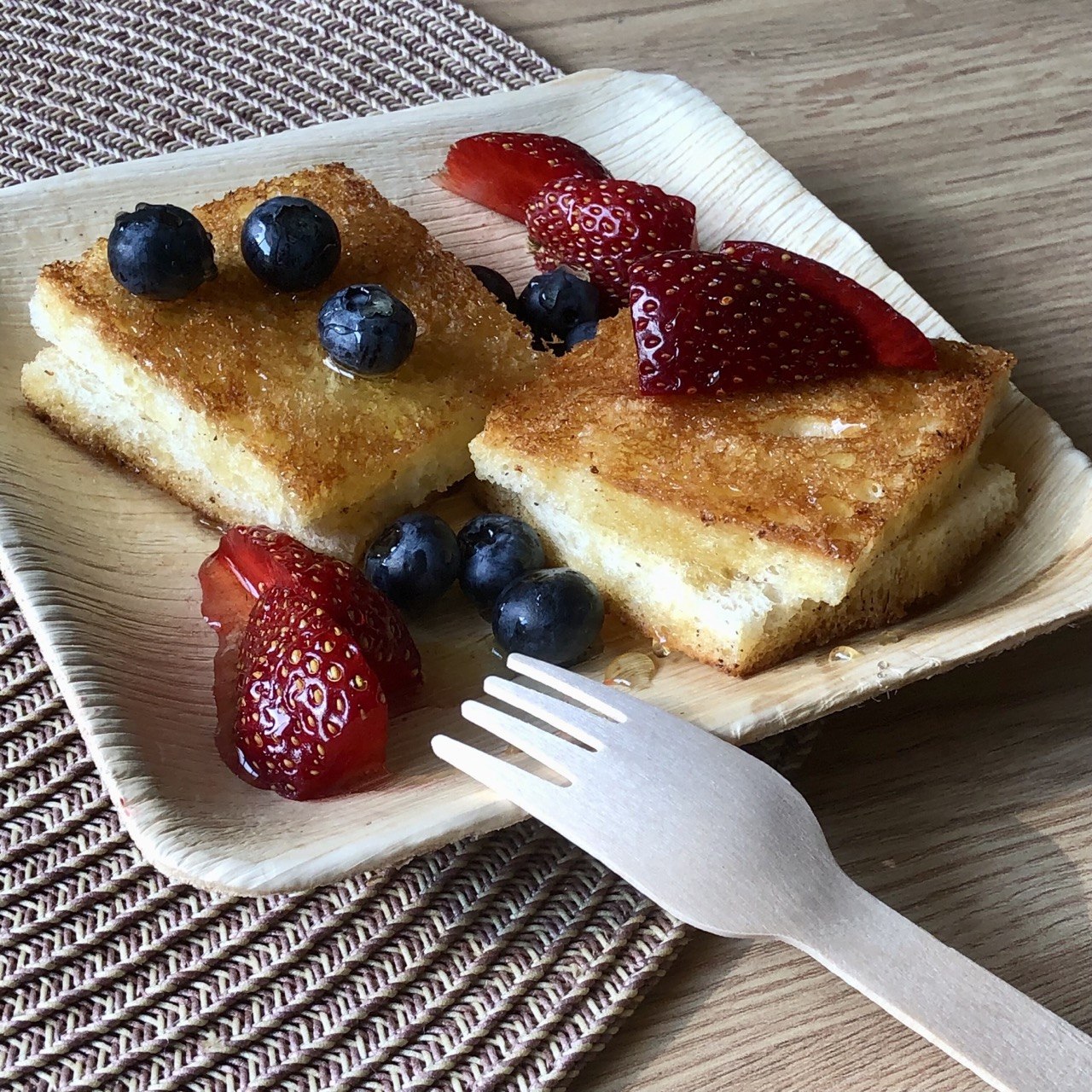
French toast is also a great idea for outdoor breakfasts, picnics, BBQ brunches, backyard parties, bridal showers, family gatherings, catering trays, park meetups, and dessert tables. It is easy to make simple and beautiful: stack a few golden slices, add berries, drizzle honey or maple syrup, and finish with cinnamon, powdered sugar, nuts, or cream.
The warm wood-like texture of the palm leaf plate highlights golden toast, fresh berries, honey, syrup, and cream without making the setup feel too formal.
It also helps with the practical side. French toast is not a dry snack. It can come with melted butter, maple syrup, honey, berry sauce, whipped cream, caramel, or ice cream. A sturdy disposable plate helps hold a generous stack without bending, and its shape helps keep toppings and sauces contained. So whether you are serving classic maple French toast, brioche French toast with berries, or a dessert-style version with caramel and ice cream, the party plate can handle a little brunch drama.
***
French toast started as lost bread. Now it rules brunch. And maybe that is why people still love it: it keeps its simple soul, but with the right toppings and the right plate, it knows how to make an entrance.