Whether you are planning a birthday, anniversary, bridal shower, small wedding, or summer dinner, the best outdoor events feel intentional without becoming overly formal.
Think Like a Professional Event Planner
A nonprofessional host often begins with one question: What flowers and plates should I use?
A professional planner begins somewhere else:
What will guests see when they arrive?
Where will they go for a drink?
Where will they naturally stop and talk?
Who will sit together?
What will the space look like after sunset?
What will happen if it becomes windy, cold, or rainy?
An amateur decorates individual objects. A professional creates a hierarchy of experiences.
This includes:
- The arrival moment
- A bar or welcome-drink area
- A clear path to the tables
- A practical location for food preparation
- Small conversation areas
- Lighting after sunset
- Protection from sun or rain
- Access to restrooms, electricity, and parking
- The transition from dinner to music or dancing
1. Use One Long Table
For a birthday, anniversary, or small wedding, one long table often feels more modern than several separate tables.
Use one wooden table, a long folding table covered with linen, or several narrow tables placed together. Serve food family style on large platters so guests can pass dishes and interact.
Before setting it up, check:
- Whether the ground is level
- Whether guests can move behind the chairs
- Whether serving dishes will fit in the center
- Whether the table will remain shaded
- Whether food can be brought out easily
2. Create a Collected Table
Modern outdoor tables do not need to look like a complete matching set. A collected or residential-style table may include:
- Colored or patterned dishes
- Glasses in slightly different shapes
- Linen napkins
- Vintage flatware
- Small ceramic vases
- Candleholders in different heights
- Wooden boards and serving bowls
The goal is to make the table feel like it belongs to a beautiful home rather than a banquet hall. However, collected does not mean random. Choose one or two repeating elements, such as a color, material, pattern, or shape.
For example:
- Green glasses, herbs, and striped napkins
- Amber candleholders, oranges, and natural wood
- Blue serving dishes with blue and white flowers
- Cream linen, simple candles, and wooden accessories
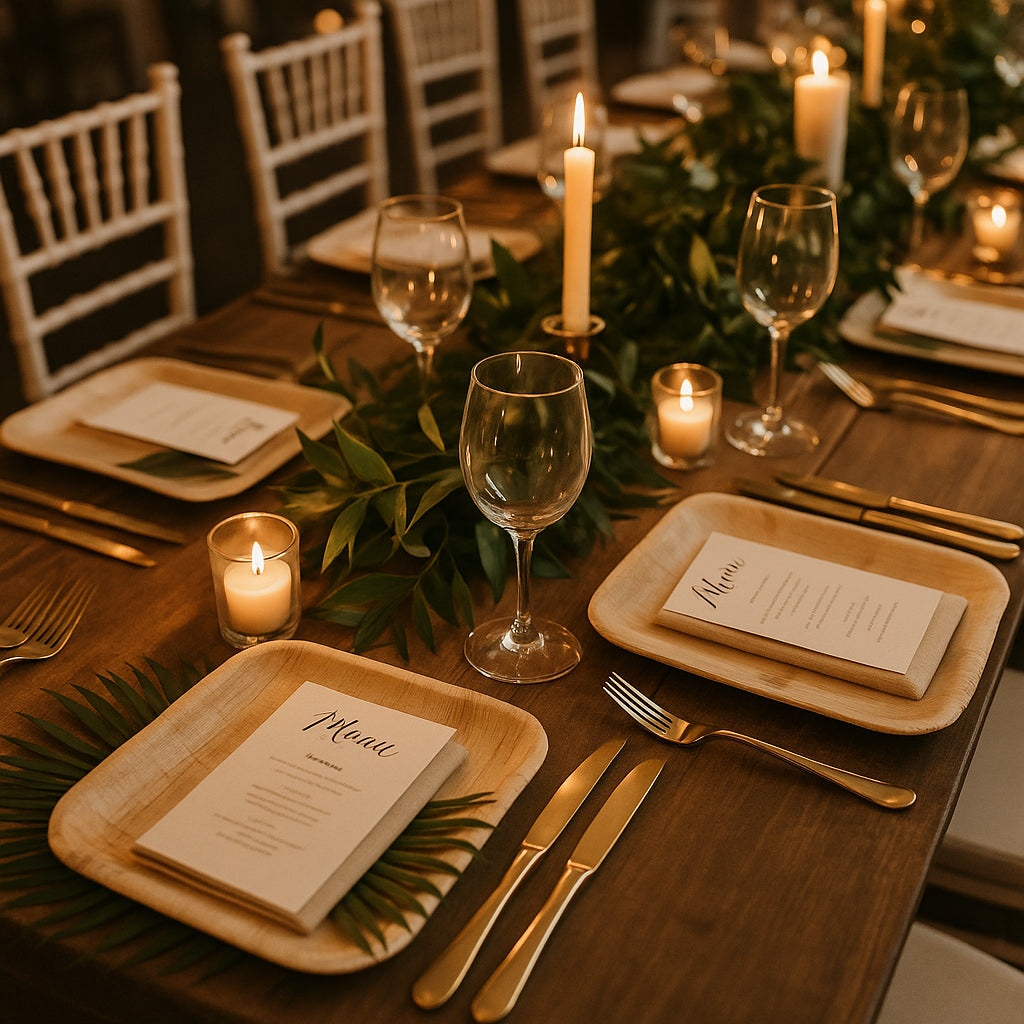
Palm leaf plates fit naturally into this type of table. Their natural texture works well with linen napkins, wooden boards, colored glassware, ceramic bowls, and garden flowers.
For a layered place setting, use a larger palm leaf plate for the main meal and a smaller party plate for appetizers, bread, or dessert.
3. Bring Color Back
For several years, many outdoor parties were dominated by beige linens, pampas grass, burlap, eucalyptus, and neutral wooden signs.
Modern outdoor entertaining is becoming more colorful.
Popular directions include:
- Bright pink and red
- Olive, lime, or deep green
- Burgundy and wine
- Chocolate brown
- Pale blue, lavender, and white
- Ochre and dusty blue
- One vivid accent inside a quiet palette
This might come from colored candles, patterned napkins, flowers, fruit, tinted glassware, or a table runner.
A simple formula is:
One neutral + one supporting color + one accent
The natural tan color of palm leaf plates can serve as a neutral base. Stronger colors can then come from food, flowers, glasses, or linens without making the table feel crowded.
4. Let Food Become Part of the Decor
A modern outdoor table does not need to be covered with large floral arrangements. Food can provide color, shape, and texture.
Use:
- Lemons and oranges
- Figs, grapes, peaches, and berries
- Tomatoes and artichokes
- Bread with butter or spreads
- Large seasonal salads
- Cheese and grazing boards
- Family-style dishes in ceramic bowls
- Desserts on a separate table
This does not mean scattering fruit randomly between the plates. The food should follow the same visual direction as the rest of the event.
An Italian-inspired summer table might include tomatoes, basil, lemons, focaccia, olives, and painted ceramic bowls.
A romantic garden dinner might use figs, grapes, bread, flowers, and wine-colored napkins.
A bright birthday table might combine berries, colorful drinks, pink flowers, and small desserts.
Leave enough room for large platters to be passed comfortably. Use deep bowls for dips, salads, fruit, and sauces.
For grazing-style parties, give each guest an individual plate instead of expecting everyone to eat directly from the serving board.
Small palm leaf plates work well for appetizers, fruit, cake, and grazing portions. Larger plates are more practical for sandwiches, salads, grilled food, and side dishes.
5. Use Lighting Instead of Excessive Decor
During the day, guests notice flowers, linens, plates, and food.
After sunset, the atmosphere is created by light.
Instead of relying on one string of lights, use several layers:
- String lights above the dining area
- Candles inside protected holders
- Lanterns on the ground
- Small rechargeable table lamps
- Uplighting on trees
- Lights along paths
- Soft lighting around the drink station
- Practical lighting near food preparation areas
Each layer has a different function.
Overhead lights define the main space. Candles make the table feel intimate. Ground lanterns show guests where to walk. Tree lighting gives the lawn depth after dark.
Professionals also plan how lighting changes during the event. Drinks may begin in daylight, dinner may happen at sunset, and cake or music may continue after the lawn is completely dark.
Test the lighting at the same time of day as the gathering.
Protect candles from wind and keep open flames away from dry grass, paper decorations, and low flowers.
A Simple Formula for a Home Gathering
For a nonprofessional host, use this formula:
One format + three colors + one main decorative idea
For example:
Format: One long wooden table
Colors: White, green, and orange
Main decorative idea: Oranges and small flower vases along the center
Everything else should support this direction rather than compete with it.
You do not need patterned dishes, elaborate flowers, colored candles, printed menus, fruit, ribbon, and decorative signs all at once.
Choose one feature guests will remember:
- A long candlelit table
- One dramatic flower arrangement
- A colorful fruit display
- A beautiful grazing table
- A canopy of string lights
A successful table has a clear focal point and enough empty space for guests to eat comfortably.
The Safest Order for Planning
1. Decide How Guests Will Eat
Will you serve a full seated dinner, a buffet, or appetizers that guests can eat while standing?
A full dinner requires larger plates, chairs, flatware, and room for serving dishes.
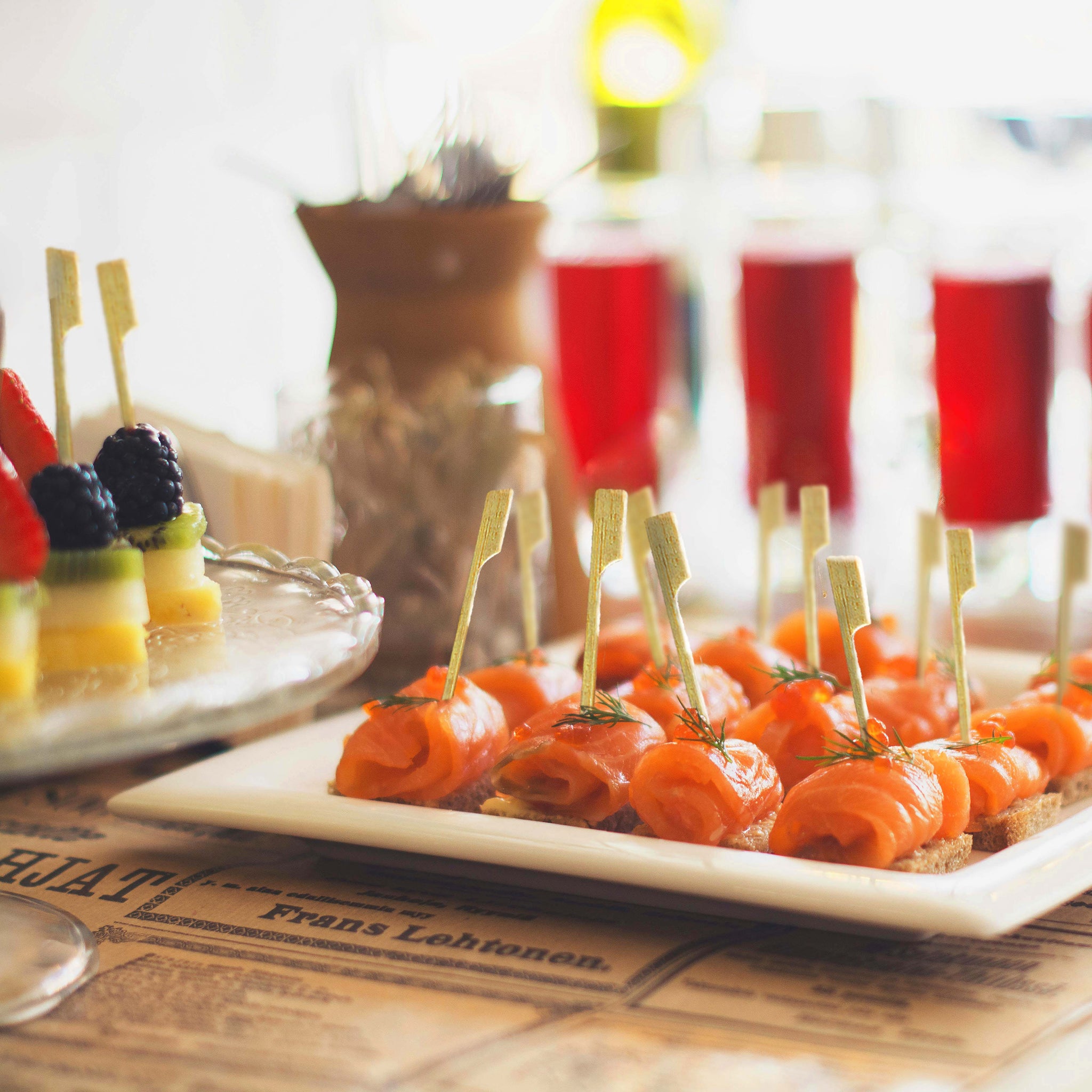
A grazing or cocktail-style party may need smaller disposable plates, cocktail picks, napkins, and several food stations.
2. Choose the Table Height
A regular dining table is more comfortable for a full meal.
A low picnic table creates a relaxed look, but it may be difficult for older guests, people with limited mobility, or anyone wearing formal clothing.
For a mixed group, use regular tables and add a separate low picnic area for casual lounging.
3. Check the Ground and Shade
Place tables on level ground.
Watch how sunlight moves across the lawn. A table that is shaded at noon may be in direct sun later in the afternoon.
Use umbrellas, a canopy, or a tent when necessary.
4. Arrange the Practical Items First
Set out:
- Tables and chairs
- Plates and flatware
- Glasses or cups
- Serving dishes
- Food stations
- Trash and recycling areas
Only after the setup works should you add flowers, candles, fruit, and decorations.
5. Create a Separate Drink Station
Do not place every bottle and pitcher on the dining table.
A separate drink station prevents guests from crowding around seated diners and gives people a natural place to gather when they arrive.
Include water, cups, ice, napkins, and a bottle opener.
6. Prepare for Outdoor Conditions
Outdoor gatherings always require planning for:
- Sun
- Heat
- Wind
- Rain
- Mosquitoes
- Uneven ground
- Food temperature
- Evening cold
Use sturdy tableware on windy days. Keep napkins from blowing away by placing them beneath plates or flatware.
Palm leaf plates are useful outdoors because they are more rigid than thin paper plates and can hold heavier food without bending easily. Their natural appearance also works for both casual backyard birthdays and styled anniversary or wedding tables.
Keep food covered until serving, provide insect protection, and have blankets available if the evening may become cool. Guests will not appreciate an elaborate tablescape if they are too hot, too cold, or being eaten by mosquitoes.
***
A modern gathering on the grass should feel easy to enter, comfortable to move through, and memorable after sunset.
Begin with the way guests will use the space. Then choose one table format, a limited color palette, and one strong visual idea.
The food, lighting, flowers, linens, and plates should all help tell the same story.