How to set a beautiful outdoor dinner table without overcomplicating it?
A backyard barbecue doesn't have to mean eating standing up with a plate in one hand. A seated outdoor dinner can still feel relaxed — with a comfortable place to eat, a beautiful table, and less work for the host. If you're looking forlate summer table setting ideas, the best approach is often to keep things simple, natural, and practical.
Start With a Simple Place Setting
For most outdoor dinners, a simple layered setting is enough:
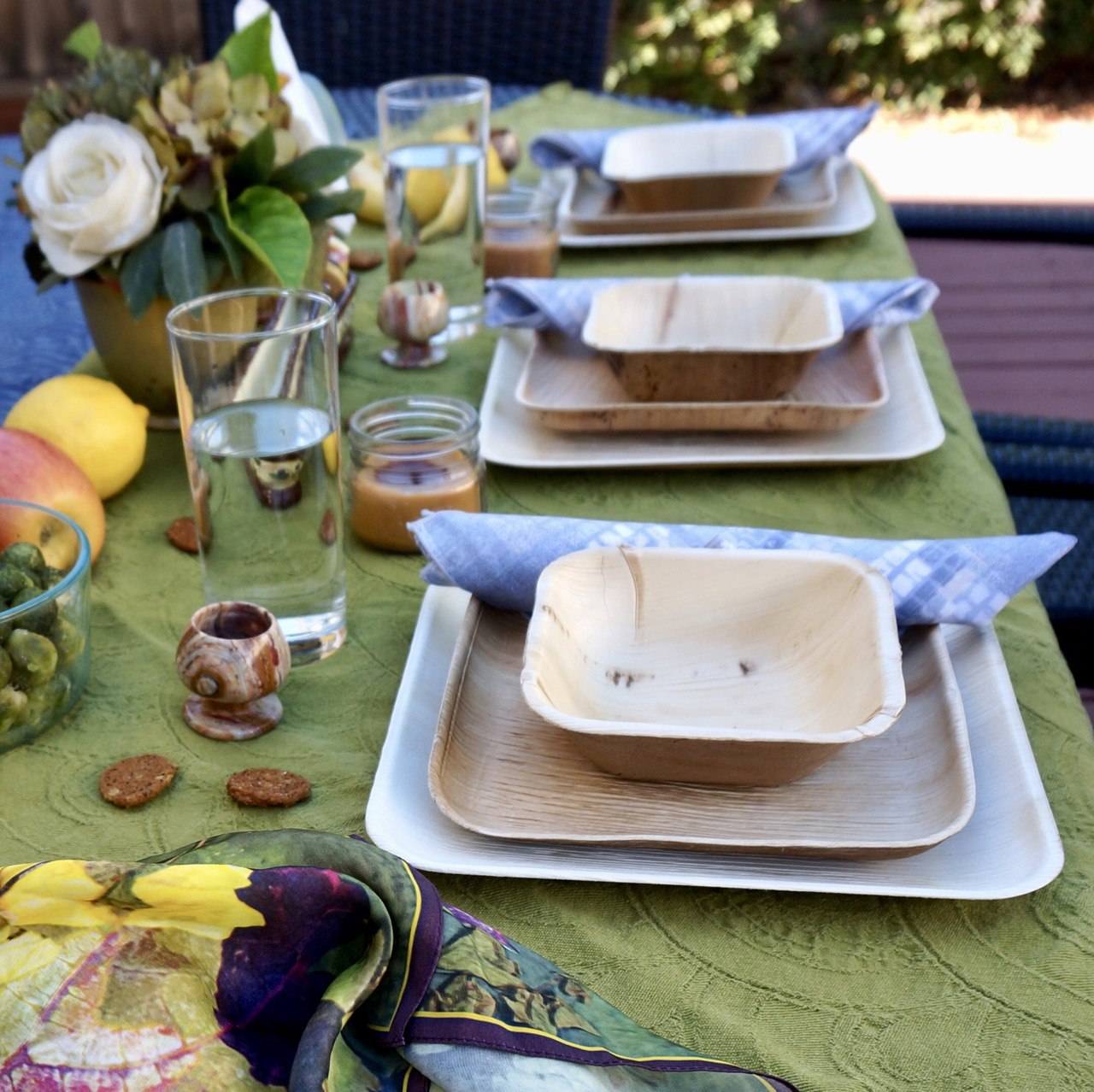
10-inch dinner plate + 8-inch appetizer or salad plate + napkin + fork and knife + drinking glass.
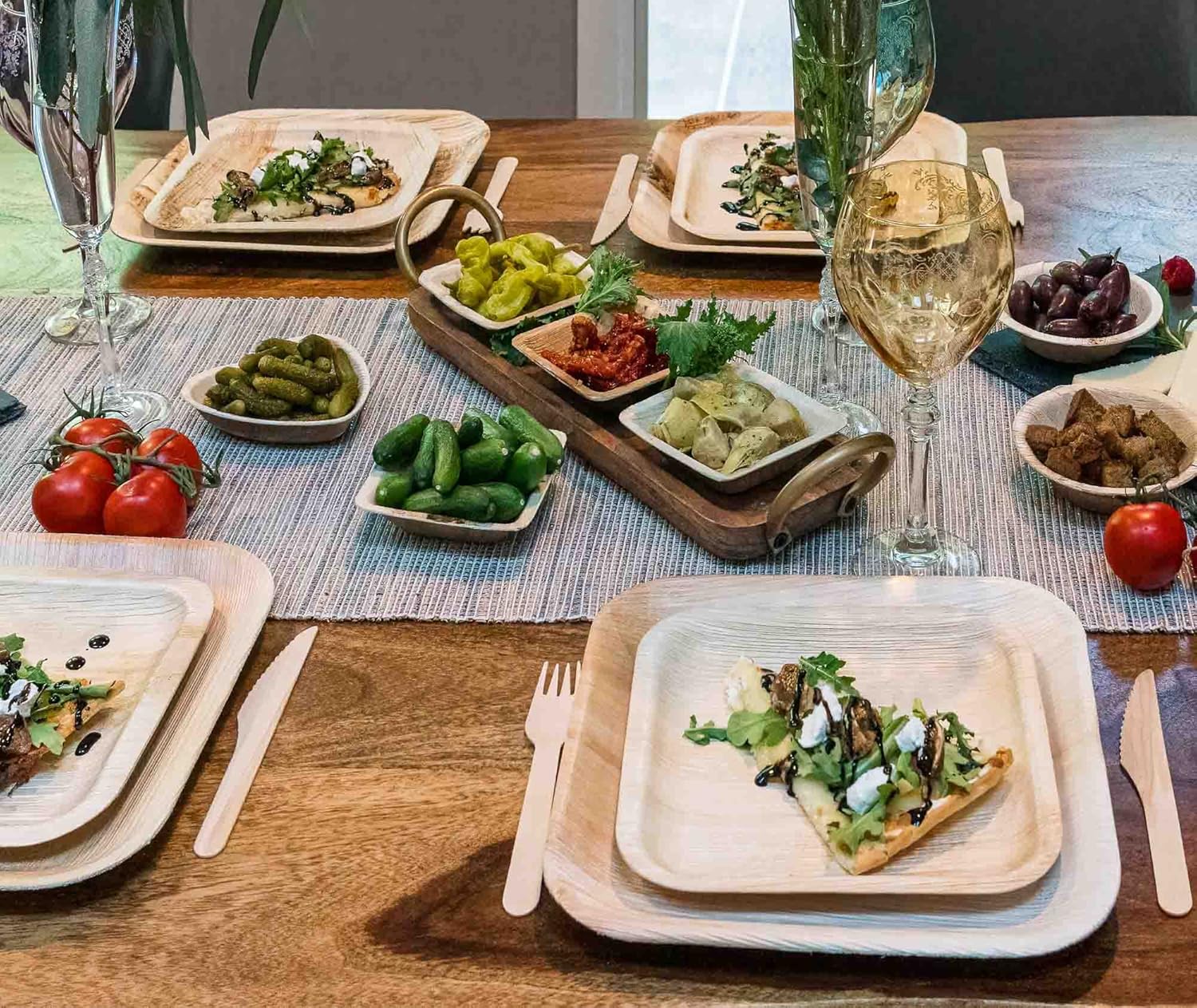
Palm leaf dinnerware is a great option when you wanteco-friendly disposable plates without making the table look completely disposable. In fact, natural palm plates look especially good mixed withmetal flatware, cloth napkins, and real glassware. The contrast makes the table feel like a relaxed dinner party rather than a picnic.
You can add a smaller plate or bowl when it has a purpose. A 4- or 6-inch heart plate can hold bread, an appetizer, or dessert, while a 5-inch bowl works well for soups, fruit, salad, or a small side.
The palm leaf already brings natural color and texture to the table, so you don't need much more. Pair yourcompostable party plates with neutral linen, gingham, woven placemats, clear or colorful glasses, and simple seasonal accents.
Divide the Party Into Three Zones
Trying to fit every dish, drink, and condiment on the dining table quickly makes it crowded. Instead, think of your outdoor dinner as three zones.
1. The dining table: Keep water, salt and pepper, bread, and one or two condiments. Leave enough space for glasses, plates, and conversation.
2. The serving station: Use a side table, kitchen island, bar cart, or another nearby surface for salads, corn, grilled vegetables, buns, sauces, pickles, and extra servings. If possible, create a separate spot for drinks, ice, and glasses so guests can refill their own.
3. The kitchen or grill area: Keep backup food, dishes that need to stay hot or cold, and dessert here until they are needed.
Guests can serve themselves and then sit down together, while the dining table stays comfortable instead of becoming a buffet. This setup also works especially well when usingdisposable plates for BBQ: guests can easily go back for another serving without the host constantly clearing and resetting dishes.
Decorate With Things That Don't Get in the Way
Late summer gives you plenty to work with: lemons, peaches, tomatoes, figs, grapes, pears, herbs, or garden greenery. Arrange them loosely down the center of the table or use a few small vases instead of one large floral arrangement.
Keep decorations low enough for guests to see each other across the table.
In August, you don't have to rush into pumpkins and full fall decor. Cream or white linens, olive green, terracotta, muted yellow, plum, seasonal fruit, and natural materials create an easy transition from summer barbecue season into early fall.
Plan for Wind, Sun, and Real Life
Outdoor tables need to work with the weather.
Put the table in the shade whenever possible and choose a washable tablecloth. On breezy days, tuck napkins partly under the dinner plates so they don't blow away.
Stemless glasses or sturdy outdoor tumblers are also less likely to tip over than tall glasses.
And don't bring every serving dish outside at once. Put out smaller portions and refill them as needed, especially on hot days.
Set the Table Before You Start Cooking
One of the easiest ways to make hosting less stressful is to set the table before the last-minute cooking begins.
Arrange the tablecloth, palm leaf plates, glasses, flatware, napkins, and decorations first. Decide where the serving dishes and drinks will go.
Then, when guests arrive, the party already looks ready — even if dinner is still on the grill.
A good outdoor table doesn't need to be formal or perfectly matched. It simply needs to be comfortable, easy to use, and easy enough for the host to enjoy the dinner too.