At a Chinese tea tasting, tea is the focus. Its aroma, changing flavor, and lingering finish deserve attention. Food should refresh the palate without competing with the tea.
Serve the first two or three infusions without food. Once guests are familiar with the tea, introduce a few mild snacks in small portions.
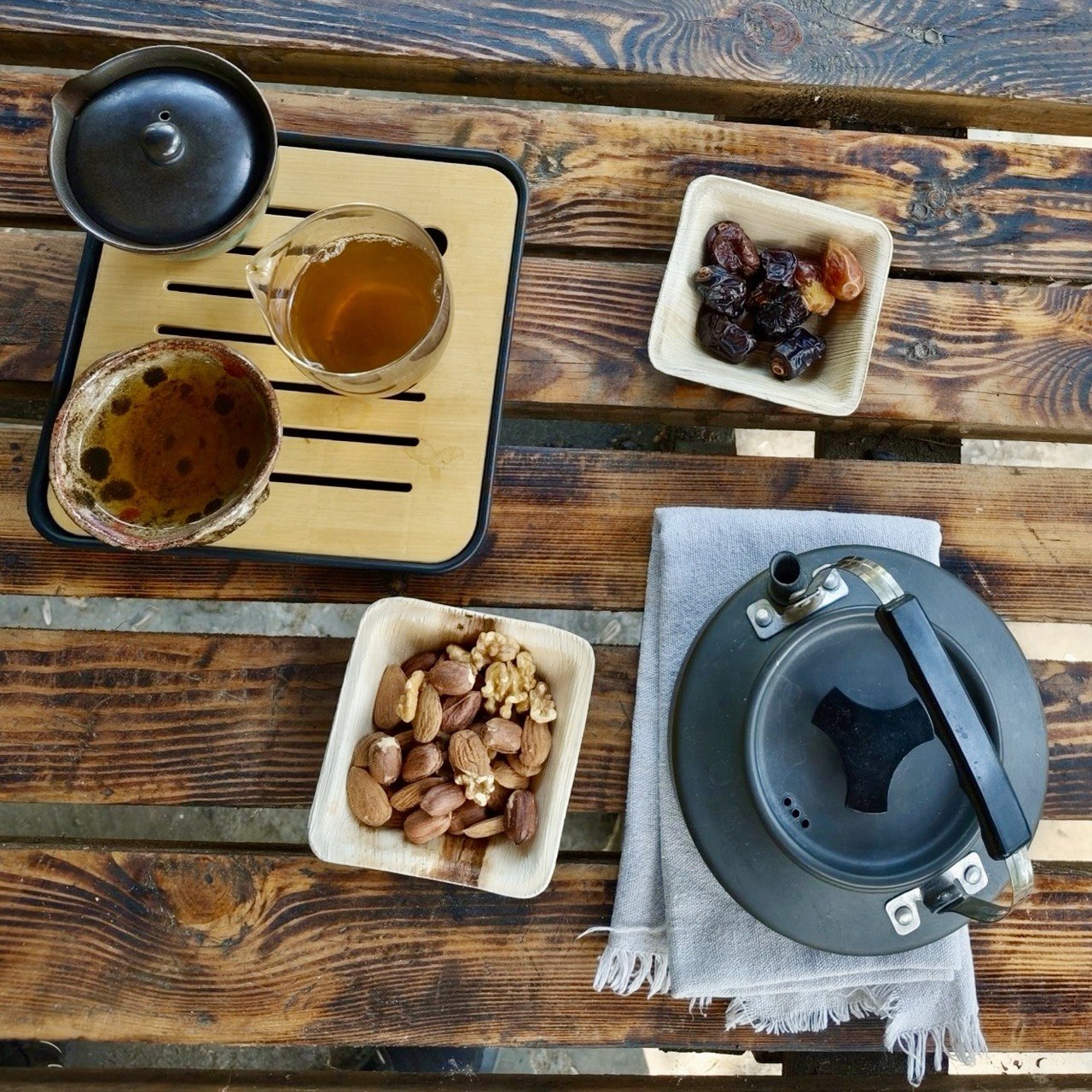
Usesmall disposable bowls for crackers, nuts, and seeds. Arrange fruit and pastries on largepalm leaf plates. Add short bamboo picks for sliced fruit and soft cakes, plus individual 4-inch plates or napkins for each guest. For a catered tasting, these serving pieces also work as practicaldisposable catering plates that require little cleanup.
1. Green Tea: Keep the Flavors Neutral
Chinese green teas such as Longjing, Bi Luo Chun, and Huangshan Maofeng can be fresh, vegetal, nutty, and naturally sweet. They are also easily overpowered.
Serve:
- Plain rice crackers
- Pumpkin seeds
- Unsalted cashews
- Thin slices of Asian pear
- Lightly sweetened mung bean cakes
Place crackers, seeds, and cashews in mini palm leaf bowls near the tea tray. Arrange pear slices and bite-size cakes on separateeco-friendly appetizer plates. Provide mini bamboo skewers for the fruit and personal small plates for guests.
Save the mung bean cakes for later infusions. Avoid chocolate, citrus, candied nuts, and very sweet pastries, which can make delicate green tea taste bitter.
2. White Tea: Choose Food According to Its Age
Young white teas such as Silver Needle and White Peony are light, floral, and softly sweet. Pair them with:
- Rice crackers
- Unsalted almonds
- Asian pear
- White grapes
- Fresh figs
Aged white teas are deeper, with honeyed, woody, or dried-fruit notes. They can support:
- Walnuts
- Chestnuts
- Dried figs
- Mild chestnut or bean cakes
Use mini palm leaf bowls for crackers and nuts. Serve fresh or dried fruit on a larger palm leaf plate with bamboo picks. Keep pastries on their own plate so crumbs and fruit moisture do not mix.
Fresh fruit works especially well with young white tea in spring or summer; dried fruit and nuts suit aged white tea and an autumn table.
3. Oolong Tea: Match the Food to the Roast
Light oolongs, including floral Tieguanyin and high-mountain teas, may have orchid, cream, fresh grass, or soft fruit notes.
Serve them with:
- Rice crackers
- Cashews or almonds
- Pear
- White grapes
- Melon
- Almond cookies
Put crackers and nuts in mini bowls. Arrange the fruit on largerparty serving plates and provide cocktail picks. Introduce cookies only after several infusions.
Dark and roasted oolongs, including Da Hong Pao, Shui Xian, and roasted Tieguanyin, can handle richer flavors:
- Roasted almonds
- Walnuts and pecans
- Chestnuts
- Dried figs or apricots
- Black sesame crisps
- Small mooncake pieces
Divide nuts and dried fruit among mini palm leaf bowls. Serve sesame crisps and mooncake bites on a flat appetizer plate. Personal 4-inch plates help contain crumbs and sticky fillings.
With their toasted, mineral, woody, or caramel-like notes, roasted oolongs are particularly well suited to an autumn tea table.
4. Chinese Red Tea: Add Dried Fruit and Pastries
Chinese red tea—called black tea in most Western countries—includes Dian Hong, Keemun, and Jin Jun Mei. Its malty, honeyed, fruity, or cocoa-like flavor makes it more pastry-friendly than green or young white tea.
Serve:
- Walnuts or pecans
- Dried dates
- Dried apricots and figs
- Sesame cookies
- Red bean pastries
- Chestnut cakes
- Mooncake bites
Place nuts and dried fruit in mini bowls. Arrange cookies and pastries on one or two large palm leaf dinner plates. Cut cakes into bite-size portions and provide bamboo picks or mini forks for soft and sticky pieces.
Even with a full-bodied red tea, keep portions small. The purpose is to complement the tea, not turn the tasting into a dessert buffet.
Keep the Table Simple
A complete Chinese tea tasting table needs only a few mini bowls of crackers, seeds, or nuts and several shared plates of fruit and pastries.
Start with the tea alone, introduce neutral snacks first, and save sweeter fruit and cakes for later infusions. Small palm leaf bowls, larger serving plates, personal 4-inch plates, and bamboo picks keep the table practical and welcoming while allowing the tea to remain the center of attention.